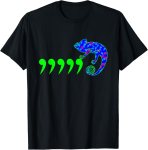
A funny thing happened when I got feedback from the “kick-start editor” for my debut novel, Wish I Was Here. She checks the first 20 pages of your manuscript to give you an idea of stuff to look out for in the rest of your book. Mainly, it was all about the commas.
This cracked me up because commas were Mark’s primary concern when he did a run-through also. I specifically remember him adding a comma before “then” somewhere.
This lady? “No commas before then unless what follows is a complete thought.”
I understand the mechanics of that, sure, but what about when there’s a natural pause where the comma would go?

I’d love your guys’ take on The Great Comma Debate. Here are two examples. Please vote 1 a or b and 2 a or b.
1a At first there was nothing then a slight tickling as though from fur.
1b At first there was nothing, then a slight tickling as though from fur.
2a Even if I told them about the van, I didn’t know where it was headed, besides north.
2b (or not 2b) Even if I told them about the van, I didn’t know where it was headed besides north.
Which seem better to you? Tell me in the comments.
When I questioned her about the commas, she admitted, “Commas can be a personal choice.”
But more importantly…
Here’s how she started her email to me:
“First, wow! You’ve got a great story going. It’s also in very good shape edit-wise. I had a hard time finding things to comment on.”
But there are always commas, apparently.
At the end of her edits, she wrote, “Wow! I’m going to have to find time to read this whole thing.”
Keep in mind, she was only required to read the first 20 pages. But the next morning, I found another email:
“I finished reading/skimming the whole thing last night (well, early this morning lol). Do you have a sequel planned? I thought your book was intriguing and gripping and innovative.”
This is the part where I kiss my own shoulder, like my mama taught me.
This editor did, however, say one thing she would’ve liked to have been different. And, to be honest, that bothered me a bit too. There’s not much I can do about it now, as it would be more of an overhaul than I have time for. But, I agree and will amend that situation in the sequel.
Now you’re curious. Fine. Essentially, the main character needs to have more agency, as we say in the biz. Next book, she’ll reap the benefit of her creator’s martial arts knowledge and be awakened to her inner bad-assery. She’ll also be a hero by driving my dream car because the genius character doesn’t know how to drive a stick shift. Pfft. What a dork.
I’m supposed to see my cover in June. Can hardly wait for that reveal!
Thanks for being along for the ride with me!
Speaking of rides…
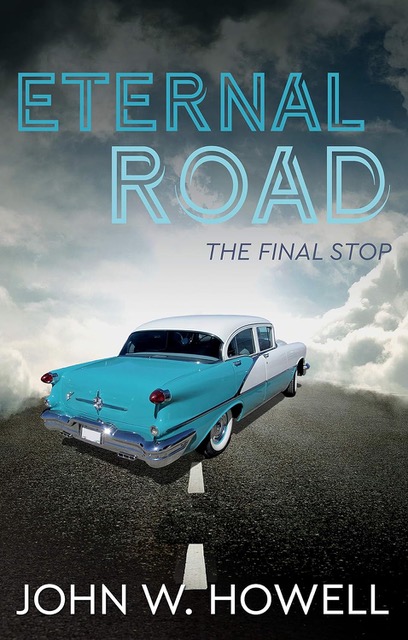
Here’s the first book in a series by John Howell:
James, on a solo road trip in his 1956 Oldsmobile, stops for a hitchhiker only to discover she is his childhood sweetheart, Sam, who disappeared seventeen years before.
James learns from Sam that he fell asleep at the wheel and died, and that Sam had been murdered but has come back to help him find his eternal home.
As the pair travel through time to witness historical events, they inadvertently catch the attention of Lucifer, who wants their souls. They also discover a threat to human survival that they must fix to save mankind.
Will James find his eternal home in grace or lose the battle with Satan for his immortal soul and the future of humanity with it?
If you like time-travel, adventure, mystery, justice, and the supernatural, this story is for you. Check it out here!

Last Q: With more than 2,200 versions, “Yesterday” by The Beatles is the most covered copyrighted song in history.
New Q: Just kidding. No soup trivia for you! Go back and vote on the comma questions above, please and thank you. I know, I’m mean. I’ll trivialize you next time.
Discover more from Writing and Martial Arts
Subscribe to get the latest posts sent to your email.
 Writing and Martial Arts
A comma should not be used to denote a pause but a different line of info. My preference is one comma in a sentence. Any more and that means the author should rework their sentence structure.
James Joyce obviously disagrees, but he is dead so phooey on him!
LikeLiked by 2 people
1a and 2b get my vote.
LikeLiked by 3 people
Okay, noted. Not a comma fan. I suppose readers can insert their own pauses, as needed. Haha! That gratuitous one was just for you, Booky! 😉
LikeLiked by 3 people
You are terrible, hahahaha!
😀
LikeLiked by 2 people
How does that editor feel about the Oxford comma? Did you ask her?
LikeLiked by 2 people
LOL! I didn’t ask her. If I had one in the first 20 pages, she didn’t have a problem with it. But, it’s possible I didn’t, so we may never know! Uh-oh! Two commas in that sentence! The horror! 😉
LikeLiked by 2 people
*whispers
I see dead commas…
LikeLiked by 2 people
Pfft!
LikeLiked by 2 people
Editors too are personal. I trust mine and pretty much go with what she says.
Umm, “Now you’re curious, fine.”–shouldn’t that comma be a semi-colon, or dash. Or period? Just sayin…
LikeLiked by 2 people
Yes, Jacqui, but I like commas! 😛 Fine. I’ll fix it. (Note the period in between.) But your votes on 1 and 2?
LikeLiked by 2 people
Oh! I do have an opinion on that (I see you’re surprised). 1b because it needs that nano-pause doesn’t it? It like the argument about a comma before ‘but’. I like it. Lots of others don’t. Hmm….
LikeLiked by 1 person
There’s an argument about commas before “but”? I should think those would be required. It’s weird that there are varying opinions on this.
LikeLiked by 2 people
For #1, 1b hits the natural pause. For #2, the sentence is awkward either way; I’d suggest simplifying to something like: “Even if I told them about the van, I only knew it was headed north.”
LikeLiked by 3 people
Fair point.
LikeLiked by 2 people
1b and 2b. And, since you brought it up, there should be no comma here: But, I agree and will amend that situation in the sequel.
You most definitely need a comma when beginning a sentence after So. 🙂
“Eternal Road” sounds very interesting – exactly the type of book I’m into!
LikeLiked by 2 people
Also, technically Oxford commas are a personal choice (unless you’re a journalist) but not using them is just plain wrong. I don’t care what anyone says.
LikeLiked by 2 people
Oooh, them’s fighting words if Booky reads this.
LikeLiked by 3 people
I will go to my grave defending the Oxford comma!
LikeLiked by 4 people
I’m write there with you. 😉 😉
LikeLiked by 2 people
Write on!
LikeLiked by 2 people
Great! Now see my comment on the but matter. (Oh my. Good thing but and butt have different spellings.)
LikeLiked by 2 people
Butt Matter sounds like a proto-punk band out of Manchester!
LikeLiked by 2 people
… Yep. {nods}
LikeLiked by 1 person
Okay, here’s a real example:
He’s still there but you can see right through him.
Neither you nor I put a comma there, but the editor did. I guess I did without because it flowed without the pause. I can see that it should be there technically, though. Sigh.
Also, I’ve now found two spots where neither you nor I had commas and she added them. Seriously driving me nuts. It seems rather subjective.
LikeLiked by 1 person
Much of it is subjective; that’s the annoying thing about English grammar! You should only use a comma before but when you’re joining two independent clauses (the same holds true for “and”), BUT when the independent clauses are closely connected and short, you may omit the comma. Clear as mud, right? In this case, I feel like “He’s still there” and “You can see right through him” are connected and short. No, it wouldn’t hurt to put a comma there, but it’s also not 100% necessary.
LikeLiked by 1 person
Yes, I know that rule and agree with you. Here’s another example where she added a comma that you and I didn’t have there: Take that with you, and keep it safe. Technically correct, but it still seems unnecessary to me.
LikeLiked by 2 people
Wait, no…that one’s not even technically correct. Each independent clause has a noun and a verb. “Keep it safe” does not fit that definition.
Just out of curiosity – I’m not judging (okay, maybe a little) – what are your editor’s professional qualifications?
LikeLiked by 2 people
Welllll, when it’s a command, the subject “You” is understood.
She has published five books with this publisher and is a freelance editor. You could do that job, too. But as I just told Brian, an editor at a writer’s conference told me one thing that this woman contradicted. Turns out, she’s right. I looked it up. Even though the book is in past tense, Ana’s italicized thoughts should be in present–where I had them, until the writer’s conf. Now I’ve changed them back to present. The subjectiveness is driving me bonkers. I have more examples of you and me disagreeing with this editor. Maybe in another post…
LikeLiked by 2 people
I look forward to reading more!
LikeLiked by 2 people
Booky read them and decided fighting on someone else’s blog was in bad taste. Hehehe
LikeLiked by 2 people
You know what’s funny? I am not a fan of commas after so. *I* don’t feel a pause after so, so why should there be a comma? But I wanted a pause after but!!! I write it like I hear it, Mark!
And you had agreed with the way I had written it in the book. I went back and compared her notes with yours, but she said no comma before that particular then. What gives?
LikeLiked by 2 people
I agreed with a comma before “but” then? I must have been high or drunk.
(Kidding. I care less about the comma before “but.” I used to always stick one there myself but got tired of forever being corrected.)
LikeLiked by 1 person
Okay this is getting nuts. We gotta clarify.
Example: I enjoy Mark’s comments, but now I’m getting confused.
Are you saying you wouldn’t put a comma there?
LikeLiked by 1 person
1b and 2b for me, but I’m a big fan of the comma. And honestly, if that’s all your editor could come up with? You’re golden!
LikeLiked by 2 people
It’s quite intriguing to me that not everyone has the same votes on this. But–to clarify–you said you are a fan of the comma; however, you chose 2b which has fewer commas. Did you mean to do that? I’m going to be counting up the votes and therefore want to be sure. Thank you for voting, River!
LikeLiked by 2 people
Yes. I do like them… but only where they belong.
2b.
😉
LikeLiked by 3 people
Okay. Just making sure it wasn’t not 2b. 😉
LikeLiked by 2 people
Congratulations on the editor comments. Sounds like a compelling story. Thank you so much for the highlight of the first book in the Eternal Road series. It was a real treat to visit your post and see it here. Thanks, again. I vote for 1A and 2B.
LikeLiked by 2 people
Thank you for voting!
LikeLiked by 2 people
Don’t know why this came in as Anonymous. I thought I was logged in.
LikeLiked by 2 people
Trying to be sneaky, John?
LikeLiked by 2 people
I guess so. 😀
LikeLiked by 2 people
😛
LikeLiked by 2 people
You can learn a lot from editors, but remember that they are human.
LikeLiked by 2 people
Very true. Thanks, Tim.
LikeLiked by 2 people
1b and 2a in my book, but I was always told to put a comma where you might naturally pause when speaking. Commas are important, however. I’m thinking, “Let’s eat Grandpa” versus “Let’s eat, Grandpa.”
LikeLiked by 2 people
Excellent point, Herb! And you and me both.
LikeLiked by 2 people
When in doubt about punctuation marks and other writing rules during the editing process, I find Merriam-Webster’s “Manual for Writers & Editors” invaluable.
LikeLiked by 2 people
Good call, Rosaliene! 🙂
LikeLiked by 2 people
Pingback: Okay, you writer types. Let’s talk editing. – OFSdevs
A great editor is a thing of beauty. I think of them as part grammarian, therapist, lawyer, family member, movie director, and a few other things in between. If the worst comment your editor gave you was over commas, you’re golden! I probably agree with Mark 1b and 2b . . . but I’m a horrible writer, because I can’t really tell you why I feel that way. I go by “feel” way too much. Plus, I make up my own grammar rules. Hence the ellipsis used incorrectly above and a reliance on exclamation points. Ugh.
LikeLiked by 2 people
And exciting news on the book. Congratulations!!! So happy for you.
LikeLiked by 2 people
Hey, man, thanks! 🙂
LikeLiked by 2 people
There’s something to be said for an individual’s style, and we all have our own. I had no problem with your ellipses, for instance. I’m going back through and seeing more places where Mark and I agreed, but this editor disagreed. I may need to do a follow-up post, hopefully to assure myself that this is a “to each their own” situation.
LikeLiked by 2 people
Now this is me and some other folks may disagree but I’ve always felt the purpose of commas are to tell your story, keep things clear (eating grandpa versus time to eat) and to stay out of the way. Best to not notice them. That’s why I think it’s such a win for that to be the only thing the editor pointed out.
LikeLiked by 2 people
She did point out a couple of other minor things. I thought, sure, but also that they were kind of inconsequential. There was one other thing that I initially included in this post. It was something directly contradictory to what an editor told me at a WRITERS CONFERENCE no less. I was so annoyed that I decided not to talk about it after all. 😛
LikeLiked by 1 person
Everyone’s got an opinion. Get feedback. Always good to hear from others. And then go with what moves you. That’s my two cents!!!!!
LikeLiked by 2 people
Thanks, Brian. 🙂
LikeLiked by 2 people
Hi. I’m pretty sure that writers used to use quite a few more commas than are used these days. Anyway, I think 1b is a far better choice than 1a. As for example 2, I’m not really sure. Maybe 2b.
LikeLiked by 2 people
Excellent. Thanks for your votes!
LikeLiked by 2 people
My answer: Write poetry instead of novels and you can do whatever the heck you want with commas. No editor in the world can challenge a poet’s use of punctuation in a poem because … well you know poets do weird stuff. I once used this in a poem, “, ,” because the speaker of the poem needs to say nothing out loud so everyone can hear they said nothing.
First rule of poetry revision: Edit towards the strange.
Second rule of poetry: Rules are like eggs, made to be broken.
and my best way of fighting with an editor, “Where can I find that in the Chicago Manual of Style?” or “Can you send me your style guide so I have a reference on correct usage?” Go grammar lawyer on them — prove your point with verifiable references. Drives ’em crazy when they can’t prove it and you can show that Stephen King does it that way all the time.
LikeLiked by 3 people
When we’re sitting on the couch for our daytime talk show with a cat on our laps and a mug of tea in our hands, I will have to admit to you and the world that, unlike my character who is all about the transcendentalist poets, I am not into poetry. 😦
Although you make an excellent case for it, Andrew! 😛
LikeLiked by 2 people
and yet you reply with a poem … 😉
LikeLiked by 1 person
Well, if anything can be considered a poem, then I’m a master. 😛
P.S. Can I preorder an orange kitty? Thanks.
LikeLiked by 2 people
You’re on the kitty waiting list. and yes, poetry is easier than most people let it be.
LikeLiked by 2 people
1b & 2b are my preferences. I say it that way because no way am I getting involved in any arguments about commas. NOW if we were talking about semi-colons, then I have strong opinions, strongly held.
LikeLiked by 2 people
Well then. I will steer clear of semicolons just to be on the safe side when Ally Bean is around!
And thanks for your votes! 🙂
LikeLiked by 2 people
I have no clue, and always have a question about them myself
LikeLiked by 3 people
Ha! Fair enough, Beth! 🙂
LikeLiked by 2 people
My vote is 1b & 2b. Looking forward to the answers on your next blog 😄
LikeLiked by 2 people
Thanks for your votes, June!
LikeLiked by 2 people
It’s so exciting that your editor is so excited, Betsy! 💕 And as for the commas, I can’t comment. Punctuation is not my strong suit and I’d get crossed eyed trying to think about it!
You’ll have to share the cover with us when you are able to!
LikeLiked by 2 people
Thanks, Ab! I so appreciate your excitement! And, fair enough. You are excused from the comma questions. 😛 I will definitely share the cover. I’m looking forward to that–assuming I like it.
LikeLiked by 2 people
1b and 2a feel the most natural.
LikeLiked by 2 people
Thanks for your votes!
LikeLiked by 2 people
I almost lost my train of thought and had to stop reading comments! It’s funny how we all have different opinions. So, here’s mine:
I’m a fan of the Oxford comma and commas in general. I’ve never subscribed to using a comma if you pause in the sentence when reading it aloud. I did my best to educate myself on the rules for comma usage. I still get tripped up sometimes and have to get online and search a rule.
Mark and I don’t agree here: “there should be no comma here: But, I agree and will amend that situation in the sequel.” Yes, there should be. 🙂 It’s like starting a sentence with however. You need the comma after but and/or however.
The easiest thing for me is to remember is if there is a complete sentence before the “and” – and a complete sentence after, you need the comma before and. (Or any conjunction that might function here.)
I recently read a book that used the new style of very few commas. I didn’t like it. I hated re-reading sentences to understand exactly what they were saying. The words were running into each other!
As for your questions, I wouldn’t use either of your sentences. 🙂 I would rework them for easier understanding.
And kudos to you for getting such glowing comments from your kick-start editor!
LikeLiked by 3 people
Oh! And I just typed this sentence: The easiest thing for me is to remember is if there is a complete sentence before the “and” – and a complete sentence after, you need the comma before and.
There’s a comma after the word after. This looks like just a pause when reading, but there are two independent clauses here. A complete sentence (even though I used a dash in there) before and after the comma. 🙂
LikeLiked by 2 people
Such a thorough response! Thank you, Maddie!
LikeLiked by 1 person
I’m sorry. I should have answered your questions. 1b – but I would also put a comma after “At first” as it is an introductory clause. And 2b.
And that doesn’t mean you need the comma after “at first.” I just use them where the old rules tell me to put them. 🙂
I have my own rule of reworking a sentence whenever I’m not sure about any part of the grammar I’ve used. That’s why I offered that.
LikeLiked by 1 person
Dang, Maddie. I hit publish on my follow-up post before I saw your votes. But yours coincide with the majority, so I think it’s okay. 🙂
LikeLiked by 1 person
Haha! No problem. I’ll find your new post shortly. I’m glad you had a great response, and I don’t mind that I’m not in the tally. 🙂
LikeLiked by 1 person
You’re in the tally in spirit, Maddie! 🙂
LikeLiked by 1 person
There are many situations where we can do away with commas without much harm.
LikeLiked by 2 people
Maybe not much harm, but perhaps some harm. 😉
LikeLike
Dear Ilsa
Actually, it’s the job of the publisher’s corrector to care about the commas.
An editor who doesn’t change a lot is bad. And an author who argues with his editor a lot isn’t professional.
All the best
The Fab Four of Cley
🙂 🙂 🙂 🙂
LikeLiked by 1 person
I haven’t read the other comments, but 1b and 2b, no question about it! I need my commas!
LikeLiked by 1 person
Even though 2b had fewer commas? Just checking. That one having a stationary comma and another that comes and goes might be tripping people up.
LikeLike
Yes, even though 2b has fewer commas. I guess because I wouldn’t pause there if I was reading aloud.
LikeLike
Good to know! Thanks, Bijoux!
LikeLike
Definitely 1b. Number 2 I feel less strongly about, but if forced to choose, 2a, especially, if you’re going for a distinct pause before “besides north.” Did I mention my edits come with a fee? Like Lucy of Peanuts fame. Five cents, please.
Nice praise on your book. That’s gotta make you feel good. Although, and I’m just thinking out loud here, you don’t want to surround yourself with yes-men/women like Trump does. Growth comes from being pushed. Just a thought.
LikeLiked by 2 people
Thanks for your votes, TTA! And maybe I should write an entire post about the ten years of rejection before finding a publisher, after honing my original draft from a piece of garbage into something now publishable. This book has had more bruises than I have. No fear on the yes-men here.
LikeLiked by 1 person
You have amazing tenacity.
LikeLiked by 1 person
Thanks. I believed in the project. I knew it couldn’t be a total dud. And besides, the kitchen destruction was low to non-existent. 😉
LikeLiked by 1 person
😂
LikeLiked by 1 person
Yes, but the computer hogging was probably off the charts!
LikeLike
Well, it is MY computer, so that was allowed.
LikeLiked by 1 person
Loved this post! Editing can be such a beast, but breaking it down like this makes it feel way more manageable. I definitely agree that letting a manuscript sit for a bit before diving into edits helps so much. For the first one, 1b is correct because the comma helps separate the two ideas and makes it clearer to read. For the second, 2b flows better ‘besides north’ is essential to the sentence, so no need for that extra comma.
LikeLiked by 1 person
Appreciate your votes! Thank you, NFM.
LikeLike
I vote 1b and 2b.
LikeLiked by 1 person
Noted! Thank you!
LikeLike
Pingback: Comma Conundrum Continued | Writing and Martial Arts
1b and 2b in my book. And bless you for saying you struggle with commas. They are the most frequent target of my blog post edits. I start with too many and then it’s delete, delete, delete. I swear in elementary school we were taught a single rule on commas: use them in lists of more than two items. Your editor seems to agree because she implies their use is largely subjective. For the record (comma) I hate that commas interrupt the flow of a thought (comma) but I feel the need to use them in long sentences so the reader can take a breath.
LikeLiked by 1 person
Well, breathing is generally a good thing…
LikeLiked by 1 person
Ilsa, I have a variation of a Boy George song lyric in my head, darn ear worm.
Comma, comma, comma, comma, comma chameleon….
I have always tended to over-comma. Good luck with your book. Keith
LikeLiked by 1 person
That got in my head too! And thanks, Keith. 🙂
LikeLike
Pingback: More editing brouhaha! | Writing and Martial Arts