
And now for something a little different!
The blog community has many authors, and I’m happy to support my long-time blog buddy, Jacqui, and her book, Endangered Species, Book 1 of her Savage Land prehistoric trilogy.
From Jacqui: Savage Land explores how two bands of humans survived one of the worst natural disasters in Earth’s history, when volcanic eruptions darkened the sky, massive tsunamis crossed the ocean in crushing waves, and raging fires burned the land. Both tribes considered themselves apex predators. Neither was. That crown belonged to Nature, and she was intent on washing the blight of man from her face.
From me: Duuuuuuuuuuuuddddddeeeee!!!
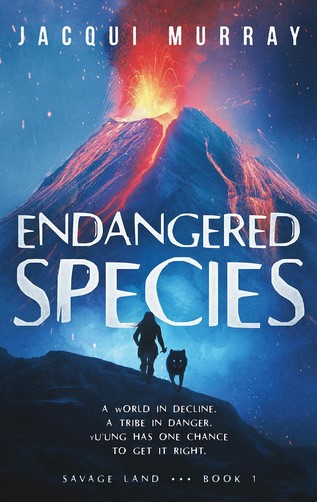
In Endangered Species, Yu’ung’s Neanderthal tribe must join with Fierce’s Tall Ones—a Homo sapiens tribe—on a cross-continent journey that starts in the Siberian Mountains. The goal: a new homeland far from the devastation caused by the worst volcanic eruption ever experienced by man. Their instinctive distrust could either end the journey before it starts, or forge new relationships that will serve both well in the future.
Bonus info: In Badlands, Book 2, the tribes must split up and independently cross what Nature has turned into a wasteland. They struggle against starvation, thirst, and desperate enemies more feral than humans. If they quit, or worse, lose, they will never reunite with their groups or escape the most deadly natural disaster yet faced by our kind.
Join Jacqui in this exciting exploration of Neanderthal life. Be ready for a world nothing like what you thought it would be, filled with clever minds, brilliant acts, and innovative solutions to potentially life-ending problems, all based on real events. At the end of this trilogy, you’ll be proud to call Neanderthals family.
About the Author
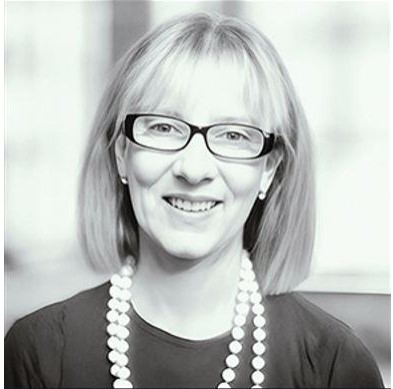
Jacqui Murray is the author of the popular prehistoric fiction saga, Man vs. Nature, which explores seminal events in man’s evolution one trilogy at a time. She is also author of the Rowe-Delamagente thrillers and Building a Midshipman, the story of her daughter’s journey from high school to U.S. Naval Academy. Her non-fiction includes 100+ books on tech in education, reviews as an Amazon Vine Voice, and a freelance journalist on tech ed topics.
Jacqui has done extensive research into the time period of her novels. Here’s an article with a collection of fun facts she compiled.
Did Neanderthals Use Fire?
Fire played a key role in our genus’ evolution, allowing us warmth, the ability to cook raw food,
make glue, protect ourselves, provide a venue for social interactions, and avail us to be active in
otherwise darkness. No one disputes this. The question is whether Neanderthals could make fire, or did they have to capture it from natural sources like wild fires.
We know Neanderthals were clever enough to create fire on their own–using rocks most likely. Neanderthals must have noticed sparks when knapping flint tools. In fact, archaeologists found traces of fires intentionally built where they couldn’t have been started accidentally by natural fires. They were either started from embers carried from an existing fire, or lit from a torch.
Here are some of the clues scientists have uncovered:
- Stone circles deep in Bruniquel Cave, France, show evidence of fire being used to light the dark.
- Geometric symbols were made on cave walls and tunnels with no natural light.
- Fire pits were found in caves, close to a probable burial site. This pre-dated Neanderthals, but was likely done by them also.
- Neanderthals cooked food. It’s unlikely they stumbled across fire each day to cook, keep warm, and protect themselves from predators.
- Neanderthals cooked pitch, which doesn’t appear in nature, to create glue for attaching stone tips to wood shafts for hunting spears. These needed to be sturdy and dependable, with stone tips that didn’t break upon impact with the tough hide of mammoth and bison.
- Birch bark was also used for glue. They probably discovered this natural glue when they threw bark into a fire, and it turned into a sticky substance. This couldn’t be done without fire.
- Fire was used to shape and harden the ends of digging sticks, critical for foraging plants for food and medicines.
- Neanderthals used manganese dioxide, a black mineral, for body decoration or art, and maybe to create fires. Manganese dioxide lowers the ignition temperature of wood from 350C to 250C, so sprinkling the mineral onto tinder made it easier to start a fire.
Thanks for reading. Now check out Jacqui’s books, starting with Endangered Species.
You can also read the first chapter here.
Thanks for stopping by to support Jacqui!
Discover more from Writing and Martial Arts
Subscribe to get the latest posts sent to your email.
 Writing and Martial Arts
Ooh, first!!
LikeLiked by 1 person
A free virtual coffee for that!
LikeLiked by 1 person
Sounds like a really interesting book, too. And I love the cover. I read the excerpt from chapter one and am hooked already. I’m happy to support this author and will add it to my TBR list.
Figures that the one time I read your blog right after it’s published, there’s no trivia question!
LikeLiked by 3 people
LOL. IKR? Sorry about the lack of trivia, but it seemed wrong to distract from Jac.
My dad was an anthropology major, so this time period fascinates me by default. It’s clear Jacqui worked hard on these. I’m so impressed. And she’s written SO much!
LikeLiked by 1 person
Thank you, Mark! I hope I don’t disappoint.
LikeLiked by 2 people
Judging by what I read, I’m not worried about that!
LikeLiked by 2 people
It’s good to see Jacqui here. The fire discussion was fascinating. Thanks Lisa for hosting her today.
LikeLiked by 2 people
Scientists are cautious about ascribing any skills to our ancestors they can’t prove so most of the ‘they used fire’ evidence is apocryphal. This list, though, is pretty persuasive.
LikeLiked by 2 people
It is a convincing list.
LikeLiked by 2 people
Agreed, John.
LikeLiked by 2 people
Yes, I enjoyed the fire info too. So neat what people can figure out.
LikeLiked by 2 people
😊
LikeLiked by 2 people
Endangered Species was a great read. I’m already looking forward to Badlands!
LikeLiked by 2 people
Thank you, Priscilla. That means a lot. I’ll have that out in less than two months.
LikeLiked by 2 people
Woohoo!
LikeLiked by 2 people
Thank you so much for hosting me, Ilsa! This will be a fun day.
LikeLiked by 1 person
My pleasure, friend. 🙂
LikeLiked by 1 person
Pingback: I’m Visiting Ilsa Rey Today! |
It’s great to see Jacqui here, Betsy. Yes, sounds to me like they mastered fire. That’s cool about manganese dioxide. I didn’t know about that one. A good thing to have on hand for the end of the world. 🙂 The book is wonderful. Congrats to Jacqui!
LikeLiked by 2 people
Ilsa is who I would have been if I discovered martial arts in my 30’s. Dang!
LikeLiked by 2 people
😛
LikeLike
LOL. Me too. Now, I just watch from the side lines and admire her bruises.
LikeLiked by 2 people
Lol! Should I post more bruise pics?? 😛
LikeLiked by 2 people
No. Lol. I just see those throws and can imagine them.
LikeLiked by 2 people
Fair enough! 🙂
LikeLiked by 2 people
Another fascinating bit of Neanderthal history! Sharing to help spread the word of Jacqui’s new trilogy.
LikeLiked by 2 people
You are precious!
LikeLiked by 2 people
😊
LikeLiked by 1 person
Thanks for the review, Ilsa, and the introduction to author Jacqui Murray 🙂
LikeLiked by 2 people
Nice to meet you, too!
LikeLiked by 2 people
Oooh, my pleasure! The blog connections expand…
LikeLiked by 2 people
I love survival tales as they are so compelling and exciting and you can’t help but insert yourself into the story. So interesting to see a survival story set in the homo Neanderthal era!
LikeLiked by 2 people
Indeed!
LikeLiked by 2 people
Living through Neanderthals has made me feel much more competent and sure of myself in this modern world. Thanks for visiting.
LikeLiked by 1 person
Another great book from one of my favorite writers and bloggers!
LikeLiked by 2 people
Love it. Go, blog community, go!
LikeLiked by 2 people
Thank you, Andrew! I hope you love this story if you have time to pick it up.
LikeLiked by 3 people
Those are really interesting facts! I’ve heard that if you have red hair, you may be descended from Neanderthals. I have no idea if that’s true or not, but as a redhead I’m all Team Neanderthal!
LikeLiked by 2 people
My mom and two of my daughters are redheads. So… high five!
LikeLiked by 2 people
🫸🏻
LikeLiked by 2 people
🫷
LikeLiked by 1 person
P.S. TTA, that was super fun. 😝
LikeLiked by 1 person
😂
LikeLiked by 1 person
We do know they had red headed individuals. I don’t know what other species of our genus had that during that era.
LikeLiked by 2 people
Wow! I struggle when I have to research using poison to kill someone. I can’t even imagine Jacqui’s research – Neanderthals, volcanic eruptions, tsunamis, Siberian Mountains, survival, etc.
Very nice, Ilsa, highlighting your friend today. The book looks and sounds amazing!
LikeLiked by 2 people
Thanks for reading, Maddie. 🙂 And, yeah, I’m not super fond of research, either, but if you’re really interested in the topic, I’m sure that helps a great deal.
LikeLiked by 2 people
It’s all fun though, innit? Discovering how to make a believable story? Thanks for the visit.
LikeLiked by 2 people
I agree, Jacqui! I even read books like, “How to Write a Dick (writing fictional sleuths).” I immersed myself in 40’s slang for a while, too. It is definitely fun learning and making our stories believable. I love the premise for your book(s) and will have to check them out!
LikeLiked by 2 people
Wow. What a book title.
LikeLiked by 2 people
To be fair, the subtitle and cover art help: How to Write a Dick: A Guide for Writing Fictional Sleuths from a Couple of Real-Life Sleuths
LikeLiked by 2 people
And when you’re able to add so much authenticity to your characters…. priceless.
LikeLiked by 2 people
Wonderful that you highlighted Jacqui’s fantastic book, Ilsa!
LikeLiked by 2 people
Jacqui is probably my longest-running follower. I’m happy to help her. 🙂
LikeLiked by 2 people
You’re the only one I know who talks about Martial Arts and women. I love that!
LikeLiked by 2 people
We’re kindred spirits, Jacqui. 🙂 ❤
LikeLiked by 1 person
wow, this book sounds like a great adventure –
LikeLiked by 2 people
Right?! 🙂
LikeLiked by 2 people
I called it a ‘prehistoric thriller’ at first, but there is no such genre!
LikeLiked by 2 people
There is now. 😉
LikeLiked by 1 person
Oh I LOVE books like these! Thank you so much – I have discovered a new author now 😊 Am constantly looking for new reading material. Book – and more samples – already downloaded. 👍🏻
LikeLiked by 2 people
Fabulous! Thanks, Andrea. And when you finish one, I’m sure Jacqui would really appreciate if you left a review on Amazon, and maybe Goodreads too. That’s very helpful for authors. 🙂
LikeLiked by 2 people
Oooh–that reaction is what we-all write for. Thank you so much!
LikeLiked by 2 people
Jacqui is a wonderful writer! thanks for featuring her here
LikeLiked by 2 people
It was definitely my pleasure. She’s a fine human being. 🙂
LikeLiked by 2 people
Thanks so much, da-AL! You are very kind.
LikeLiked by 2 people
Best of luck to her on her books!
LikeLiked by 3 people
Indeed!
LikeLiked by 1 person
Thank you! Luckily I love writing so that in itself is a victory.
LikeLiked by 1 person
Interesting facts about Neanderthals. I can imagine how fascinating it’d be to research that topic in depth. No doubt the books will be wonderful.
LikeLiked by 2 people
Thank you, Ally. Nice to hear from you again.
LikeLiked by 1 person
Agreed on both counts!
LikeLiked by 2 people
First off Jacqui, let me just say it’s delightful to hear you share about her books and bruises 😉.. love the first book she did.
Great shout out to your amazing book… great job, Betsy!!! 💗
LikeLiked by 2 people
Thank you, Cindy! Ilsa has been a wonderful host.
LikeLiked by 1 person
You’re so very welcome, Jacqui!!!💓
LikeLike
I actually visited a cave in France, can’t remember the name, that had cave paintings by Cro Magnon man. Were they the predecessors or did they come after??
LikeLiked by 2 people
That’s super cool! Hopefully Jacqui will see and answer your question.
LikeLiked by 2 people
Hi Ilsa. 🙂 I just read Jacqui’s reply. I hope you don’t mind but I have even more questions. lol
LikeLiked by 2 people
Not at all!
LikeLiked by 1 person
😀
LikeLiked by 2 people
Cro Magnin–now an obsolete name for early Homo sapiens–lived at the end of Neanderthals time so contiguously. They probably interbred. I almost included them in this trilogy until I found out the term is in disrepute! Sigh.
LikeLiked by 2 people
Interesting. And who knew? Well, you, obviously.
LikeLiked by 1 person
Oh! Thanks Jacqui. So were they kind of between pure Neanderthals [The People] and full on homo sapiens [The Tall Ones]? And why is the name in disrepute??
LikeLiked by 2 people
Cro magnon man was considered a subspecies of Homo sapiens. It was later decided they weren’t different enough for that designation and their name gave way to simply “anatomically modern human” or “early man”. Neanderthals are a species (not a sub species), Homo neanderthalensis. Does that make sense?
And thank you for letting me chat about one of my favorite topics!
LikeLiked by 1 person
Thank you for your review it sounds like a wonderful book!
LikeLiked by 2 people
Thanks for visiting!
LikeLiked by 1 person
Pingback: You should see the other guy | Writing and Martial Arts